
STAR Method Interview Answer Template
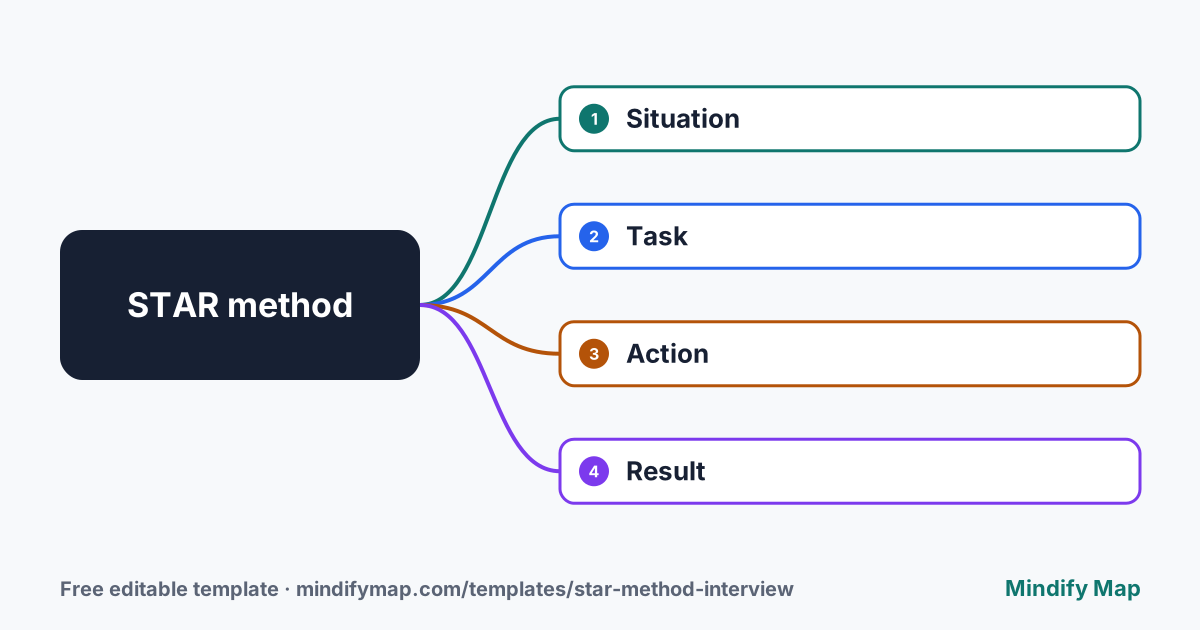
Answer behavioral interview questions with Situation, Task, Action, Result and keep the focus on what you did.
“Tell me about a time you solved a difficult problem at work”
- 登録なしで開始
- ゲストは1日2枚まで無料
- すべてのブランチを編集可能
Job seekers, interview candidates, and hiring managers
AIで白紙からのスタートにかかる時間をなくし、生成された構造にはあなた自身の判断を加えましょう。
このテンプレートでできること
- Keep the setup short
- Spend most of the answer on your own actions
- End with a measurable result and lesson
使い方
- 用意されたプロンプトをエディターで開きます。
- クイックまたは詳細なマップを生成します。
- 弱い・足りない・位置が適切でないブランチを編集します。
- PNG、PDF、XMindにエクスポートするか、共有リンクを作成します。
What branches should this star method map contain?
これらのブランチは、決まった答えではなく、抜け漏れのチェックとして使いましょう。状況に応じて別の構造が必要なら、名前を変えたり、統合したり、削除したりしてください。
- 01
Situation
Set the scene briefly: where, when, and what was at stake for you.
- 02
Task
Say what you were responsible for, not what the team was doing.
- 03
Action
Describe the specific steps you personally took and why you chose them.
- 04
Result
Share the outcome, ideally with a number, and what you learned.
マップを使う前に何を見直すべき?
生成された階層は、根拠の弱さ、場違いなアイデア、欠けている意思決定を隠したまま、完成しているように見えることがあります。
- Is the situation shorter than the action?
- Does each action describe something you did yourself?
- Is the result measurable or clearly observable?
重要な主張は適切な情報源で確認し、マップを共有する前に機密情報を削除してください。
Questions about the star method template
このテンプレートを役立てるために必要な構造、根拠、引き継ぎについての端的な回答。
What is the STAR method?
STAR stands for Situation, Task, Action, Result. It is a common way to structure answers to behavioral interview questions such as "tell me about a time when..."
How long should a STAR answer be?
Aim for about one to two minutes. Keep Situation and Task brief and spend most of the time on Action and Result.
How do I prepare several STAR stories?
Create one map per story, practice each out loud, and reuse stories across questions that test similar skills such as conflict, ownership, and failure.
Embed this star method template
教師、ライター、チームの方は、このマッププレビューを授業資料、記事、Wiki、Notionページに掲載できます。読者が編集可能なバージョンを開けるよう、クレジットのリンクは残してください。
構造をあなたの状況に合わせて具体化しましょう。
用意されたプロンプトを開き、その前提をあなた自身の根拠と制約に置き換え、共有する前にすべてのブランチを編集してください。